 1 hour ago
Introduction
March 2026 has emerged as a month of critical global developments spanning humanitarian aid, political maneuvers, technological advancements, and public health concerns. This article provides an in-depth analysis of key events shaping the international landscape, offering readers a comprehensive understanding of the challenges and responses unfolding worldwide. As the world navigates through a complex web of interconnected issues, the significance of these developments cannot be overstated. They reflect not only immediate crises but also long-term trends that will influence global affairs for years to come.
Context: A World in Flux
The early months of 2026 continue to reflect a world grappling with multifaceted challenges. Energy shortages, political unrest, technological revolutions, and health crises intersect, demanding coordinated responses from governments, organizations, and communities. These issues are compounded by geopolitical tensions, economic uncertainties, and social transformations that characterize the current global environment. Against this backdrop, several notable stories have captured global attention, illustrating the diverse and dynamic nature of international affairs today.
Mexican Volunteers Mobilize Aid for Energy-Strapped Cuba
In response to Cuba’s ongoing energy crisis, Mexican volunteers have taken a grassroots approach to provide critical aid. The island nation has faced persistent power shortages due to a combination of aging infrastructure, economic sanctions, and fuel supply disruptions. These shortages have severely impacted daily life, affecting hospitals, schools, and businesses, and exacerbating economic hardships for ordinary Cubans.
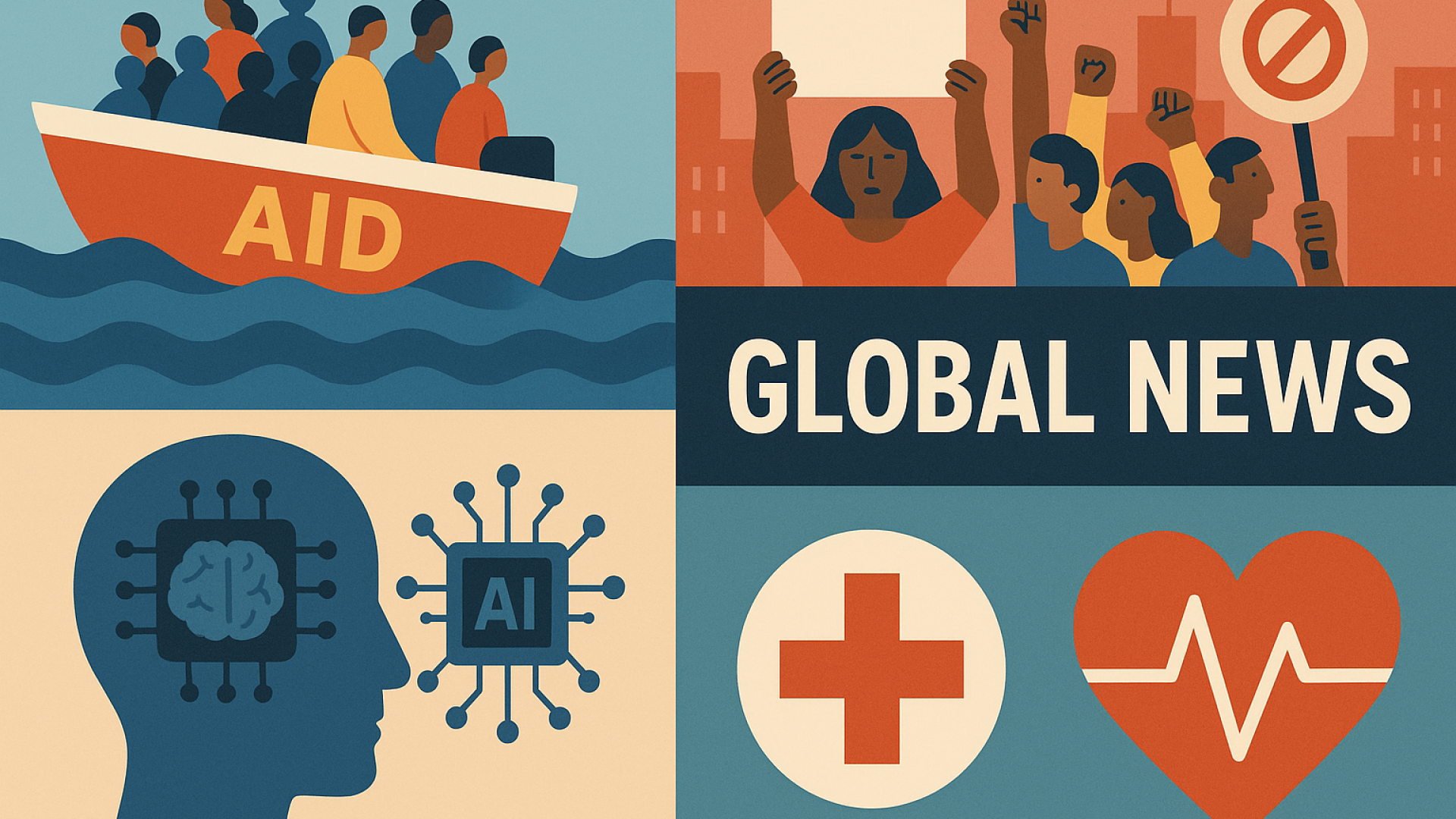
Mexican volunteers have organized efforts to load boats with essential supplies, including fuel, medical equipment, and food, aiming to alleviate the immediate hardships faced by Cuban citizens. This initiative is notable for its community-driven spirit, bypassing formal diplomatic channels to deliver aid directly to those in need. It underscores the importance of regional solidarity in times of crisis, highlighting how civil society can play a pivotal role in humanitarian assistance.
While official diplomatic relations between Mexico and Cuba remain cautious, this grassroots movement reflects a growing trend of cross-border humanitarian support in Latin America. It also raises questions about the role of non-governmental actors in international aid and the potential for such efforts to influence broader political dynamics in the region.
Tehran’s Stark Warning: Executions Linked to Protest Movements
In Iran, the government’s recent execution of men linked to protest activities has sent a clear and chilling message to dissenters, according to analysts. The executions come amid ongoing unrest triggered by economic grievances, political repression, and demands for greater freedoms. These protests have been met with harsh crackdowns, reflecting Tehran’s determination to suppress opposition and maintain control.
The executions have drawn widespread condemnation from international human rights organizations and foreign governments, who view them as violations of fundamental rights. Experts suggest that these actions may further isolate Iran diplomatically, complicating efforts to engage the regime in constructive dialogue. The situation remains volatile, with potential repercussions for regional stability and security.
Moreover, the government's approach highlights the broader challenges faced by authoritarian regimes in managing dissent in an era of increased connectivity and global scrutiny. The balance between maintaining order and respecting human rights continues to be a contentious issue in Iran and beyond.
Trump’s Executive Order to Protect Army-Navy Broadcast
In the United States, former President Donald Trump has issued an executive order aimed at safeguarding the broadcast of the iconic Army-Navy football game. This move is seen as part of a broader effort to preserve traditional American cultural events amid shifting media landscapes and political tensions. The Army-Navy game, a longstanding symbol of national pride and military heritage, holds significant cultural importance for many Americans.
The executive order emphasizes the significance of national unity and heritage, particularly in times of societal division. While largely symbolic, it reflects ongoing debates about the role of government in cultural preservation and the intersection of politics and media. Critics argue that such interventions may politicize cultural events, while supporters view them as necessary to protect national traditions from commercial or ideological dilution.
This development also illustrates the broader cultural dynamics at play in the United States, where issues of identity, history, and media influence continue to provoke passionate discourse.
Tech Workers Max Out Their AI Use: A New Era of Productivity
The technology sector is witnessing unprecedented adoption of artificial intelligence tools by workers seeking to enhance productivity and innovation. Reports indicate that tech professionals are pushing AI capabilities to their limits, integrating advanced algorithms into daily workflows for coding, design, data analysis, and decision-making processes. This surge in AI utilization is transforming how work is conducted, enabling faster problem-solving and creative output.
This rapid integration of AI raises important questions about workforce transformation, ethical considerations, and the future of human-machine collaboration. Concerns about job displacement, data privacy, and algorithmic bias are increasingly prominent in public discourse. Companies are investing heavily in training and infrastructure to support this shift, signaling a new era in technological advancement that blends human expertise with machine intelligence.
Furthermore, this trend is influencing educational curricula, corporate strategies, and regulatory frameworks worldwide. The balance between leveraging AI’s benefits and managing its risks will be a defining challenge for the coming decades.
Meningitis B Outbreak Under Investigation in the UK
Public health authorities in the United Kingdom are investigating an outbreak of Meningitis B, a serious bacterial infection that can cause inflammation of the brain and spinal cord membranes. The outbreak has prompted increased surveillance, vaccination campaigns, and public awareness efforts to contain its spread. Meningitis B is particularly dangerous for young children and adolescents, who are most vulnerable to severe complications.
Health experts advise vigilance, emphasizing the importance of early detection and vaccination. The outbreak highlights the ongoing challenges of infectious disease control in densely populated regions and the critical role of robust healthcare systems. It also underscores the need for continuous investment in public health infrastructure and research to respond effectively to emerging threats.
The UK government’s response includes collaboration with schools, healthcare providers, and community organizations to disseminate information and facilitate access to vaccines. This coordinated approach aims to minimize the outbreak’s impact and prevent future occurrences.
US Strike in Eastern Pacific Targets Alleged Drug Smugglers
The United States Coast Guard reported a targeted strike in the Eastern Pacific Ocean against suspected drug smuggling operations, resulting in the deaths of two individuals. This action is part of a broader strategy to combat transnational narcotics trafficking that threatens regional security and public health. The Eastern Pacific remains a critical corridor for illicit drug shipments destined for North America and other markets.
Authorities continue to monitor maritime routes and collaborate with international partners to disrupt illicit networks. The strike underscores the persistent challenges faced by law enforcement agencies in addressing complex criminal enterprises that exploit vast oceanic spaces and sophisticated logistics. It also highlights the human costs associated with the drug trade, including violence and community destabilization.
Efforts to combat drug smuggling are increasingly incorporating advanced technologies such as satellite surveillance, AI-driven analytics, and unmanned vehicles. These innovations aim to enhance detection capabilities and operational effectiveness in a high-stakes environment.
Hamas Considers Disarmament Plan Proposed by Trump’s Peace Board
In a surprising development, Hamas officials are reportedly considering a disarmament plan put forward by a peace board established during Donald Trump’s administration. The proposal aims to reduce violence and foster conditions for renewed negotiations between Israel and Palestinian factions. This potential shift marks a significant moment in a conflict that has persisted for decades with intermittent peace efforts.
While skepticism remains high among observers due to historical mistrust and ongoing hostilities, this consideration could open new avenues for conflict resolution. The international community watches closely as stakeholders weigh the prospects for lasting peace in a historically volatile region. Success would require substantial compromises, confidence-building measures, and sustained diplomatic engagement.
The plan’s reception among other regional actors and the broader public will be critical in determining its viability. It also raises questions about the role of external mediators and the influence of past administrations on current peace processes.
Local and Legal Developments: From Car Thefts to Extraditions
On a more localized note, a car theft incident in Washington Township has drawn attention to community safety concerns, prompting calls for enhanced security measures. Residents and local officials are advocating for increased police presence, improved surveillance technologies, and community awareness programs to address rising property crimes. This incident reflects broader trends in urban and suburban crime patterns that affect quality of life and public confidence.
Meanwhile, Costa Rica has extradited a former Supreme Court judge to the United States in a historic first, signaling increased cooperation in judicial matters and anti-corruption efforts. The extradition highlights the growing emphasis on accountability and cross-border legal collaboration to combat corruption and uphold the rule of law. It also sets a precedent for future cases involving high-profile individuals and complex international legal frameworks.
Political and Social Dynamics: Harvard Lawsuit and Belarusian Advocacy
The Trump administration’s lawsuit against Harvard University over allegations of antisemitism has sparked debate about academic freedom and institutional accountability. The case raises important questions about the boundaries of free speech, the responsibilities of educational institutions, and the mechanisms for addressing discrimination. It has ignited discussions within academic circles, legal experts, and civil rights organizations about how to balance competing values in a diverse society.
Concurrently, Belarusian opposition figure Maria Kalesnikava, despite her imprisonment, urges Western engagement with the Belarusian regime, highlighting the complexities of diplomacy and human rights advocacy. Her calls emphasize the need for pragmatic approaches that consider both the promotion of democratic values and the realities of geopolitical constraints. Kalesnikava’s situation symbolizes the broader struggle for political freedom in authoritarian contexts and the role of international actors in supporting dissidents.
Conclusion: Navigating a Complex Global Landscape
March 2026 exemplifies the multifaceted challenges and opportunities facing the world today. From humanitarian aid efforts and political tensions to technological innovation and public health vigilance, the interconnected nature of these issues demands thoughtful analysis and collaborative solutions. The events of this month illustrate how local actions can have global repercussions and how international cooperation remains essential in addressing shared problems.
As nations and communities respond to these developments, the importance of resilience, dialogue, and innovation becomes ever more apparent. Staying informed and engaged is crucial for understanding the evolving global narrative and contributing to a more stable and equitable future. The lessons learned in March 2026 will undoubtedly shape policies and perspectives in the years ahead, underscoring the enduring need for empathy, strategic thinking, and collective action in an increasingly complex world.